VS Code Slow on Mac? 10+ Ways to Speed It Up

If VS Code is slowing down on your Mac, learn the solutions here. Here, you’ll know how to make VS Code work smoothly on your Mac.
In most cases, VS Code can work well on your Mac. However, recently, some users reported that their Mac had started running terribly slow, and VS Code started showing pop-up windows that it wished to access data from other apps
In this guide, we’ll explain why VS Code lags and slows down your Mac. Keep reading to find reasons and quick fixes.
Why VS Code Is So Slow on Mac?
Here are the key reasons why VS Code runs slowly on your Mac:
- VS Code is built on Electron. Essentially, it runs a full Chromium browser instance that consumes 700MB+ RAM even if you don’t open any files. Each window creates separate renderer processes that duplicate memory usage.
- Individual extensions can consume 200MB+ each. Problematic ones like Pyright, Settings Sync, or code-spell-checker may lead to sustained 100% CPU usage by the "Code Helper (Plugin)" process.
- By default, VS Code monitors entire workspaces, including massive folders like node_modules, .git/objects, and build directories. This can consume up to 2-3GB of RAM on large projects.
- The GPU renderer process routinely uses 500MB+ of memory, especially on high-resolution Mac displays
- macOS Ventura and newer versions have introduced compatibility issues where VS Code becomes progressively laggy after 15-30 minutes of use.
- The default TS/JS extension can consume gigabytes of RAM on large codebases. It scans thousands of unopened files to provide IntelliSense.
- After you close VS Code, the Code Helper process continues running at 100% CPU.
- Although you're pre-configured exclusions for node_modules and . git, these are often ignored by extensions or fail to exclude modern package manager caches like. yarn/cache or build folders. This forces you to manually add dozens of exclusion patterns.
10+ Ways to Make VS Code Run Faster on Mac
VS Code is a fantastic editor for Mac, but sometimes it feels like it’s dragging its feet. The root cause is the foundation - Electron. In the following sections, we’ll walk you through several proven solutions to enhance its performance.
Clear VS Code Cache
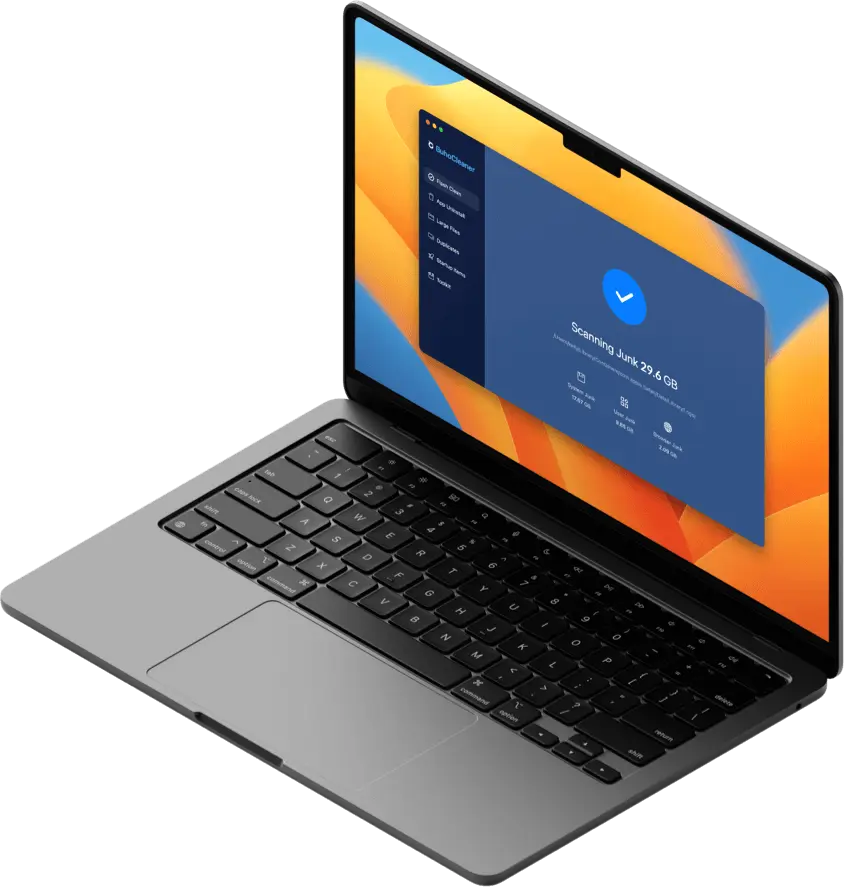
Over time, VS Code can accumulate a large number of temporary files, cached extension data, and outdated language server information. They can become corrupted or bloated, affecting the performance of VS Code. Therefore, you’re suggested to use a special tool like BuhoCleaner to clear the VS Code cache. By doing so, VS Code will rebuild indexes from scratch, eliminating corrupted data that leads to slowdown.
- Free install BuhoCleaner and launch it on your Mac computer.
- From the main interface, choose Flash Clean from the left menu.
- Click Scan > View Results, then locate VS Code in the results.
- Select VS Code and click the Remove button to clear its cache.


Close Editor Windows and Consolidate Your Work
VS Code runs on Electron. It can consume 700MB+ RAM even if you don’t launch any files. Each window creates separate processes that duplicate memory. Therefore, you can close editor windows you are not working on.
Additionally, instead of running five separate project windows, set up a multi-root workspace. You can merely open the main project folder and add other folders to the workplace.
Disable Rogue Extensions and Plugins
If rogue plugins or extensions trap you, locate and disable them.
Disable Extensions in VS Code
- Launch VS Code and open the Command Palette by pressing Cmd, Shift, and P.
- Show running extensions.
- Review the load time of each extension and disable the slow ones.
Disable Extensions via Activity Monitor
- Open the Activity Monitor and sort by CPU or Memory.
- Find processes that are named by Code Helper (Renderer) or Code Helper (Plugin).
Ignore the Exclusions
VS Code serves as a File Watcher to monitor entire workspaces, including node_modules, .git/objects, and build directories. They may take up 2-3GB RAM, so you can configure File Watcher Excludes as below:


- Launch Settings and search for “Files: Watcher Exclude”.
- Click on “Add Pattern” and add the following content:
/node_modules//.git/objects//.git/subtree-cache//.yarn/cache//build//dist//target//.next//out/
Force CPU Rendering
Sometimes, the Electron framework’s Chromium renderer may struggle with macOS’s graphics drivers. This might make the GPU process consume much memory and lead to lag in rendering. By disabling GPU acceleration and forcing CPU rendering, you can avoid slowdown on Mac.
To disable GPU Acceleration and force CPU rendering, you can:
- Open the Command Palette by pressing Cmd, Shift, and P.
- Navigate to “Preferences” and “Configure Runtime Arguments”.
- This opens an argv.json file. Add the line: "disable-hardware-acceleration": true.
- Restart VS Code on your Mac.
Make a “Reload Window” Trick
When you feel the lag start, make a “Reload Window” trick. By doing so, you can restart the VS Code frontend without closing other files:
Run “Developer: Reload Window” by pressing Cmd, Shift, and P.
Run VS Code from Terminal
Sometimes, launching VS Code from Finder can cause issues. When you launch VS Code from Finder, VS Code might inherit an incorrect environment. This might cause background processes to fail, hang, or waste. However, if you launch it from Terminal, you’ll get a clean and consistent operating environment. All components can start efficiently and run well.
- Open VS Code and press Cmd, Shift, and P at the same time to open the Command Palette.
- Run “Shell Command: Install 'code' command in PATH”.
- Navigate to your project directory via cd path/to/your/project.
- Type “code” to open the current folder in VS Code.
Use Automatic TypeScript Acquisition (ATAT)
For projects with a package.json, VS Code can use the project's specific TypeScript version. It is more efficient because Automatic TypeScript Acquisition (ATAT) can prevent the built-in TypeScript language server from struggling with version conflicts and unnecessary analysis of global TypeScript installations. It only loads the essential type definitions and compiler settings for your projects.
- Open your TypeScript/JavaScript project in VS Code.
- Verify ATAT is working by clicking on the TypeScript version number in the blue status bar at the bottom of VS Code.
- It should show “TypeScript version powered by your node_modules” or similar.
Limit node_modules Scanning and Create a tsconfig.json
The tsconfig.json file can give the TypeScript language server explicit instructions about which files to include in your project. This will prevent it from scanning and analyzing massive and irrelevant directories like node_modules, dist, or build folders and wasting resources.
- In your project, create a jsconfig.json or tsconfig.json file.
- Set the “include” and “exclude” fields to prevent the language server from scanning everything: {"compilerOptions": {}, "include": ["src/**/*"], "exclude": ["node_modules", "dist", "build"]}
Keep VS Code Updated
Always keep VS Code updated, as this can avoid compatibility issues with your Mac.


- Open VS Code on your Mac.
- Click on “Code” in the top menu bar.
- elect Check for Updates.
- If there is an update, take the instructions to download and install it.
Conclusion
In conclusion, the slowdown performance of VS Code always results from its Electron foundation, resource-intensive extensions, and compatibility issues. By clearing cache, managing extensions, configuring file watchers and TypeScript settings, disabling hardware acceleration, and taking other actions, you can enhance the editor’s responsiveness. Remember that VS Code performance is not a fixed state but a manageable condition.
Jerome is a passionate enthusiast of all things Apple. He is expertise in crafting tech-related articles, with a portfolio of more than 100 articles covering various Apple products like the iPhone, iPad, and Mac.