How to Uninstall Apps on Mac: The Complete Guide

Removing an app from your Mac is usually straightforward. For most apps, you can use Finder without installing additional software.
Some apps, however, come with their own uninstallers to remove background services, extensions, or other components. You may also want to review leftover files after removing an app.
In this guide, you'll learn four ways to uninstall apps on Mac and find answers to common uninstall questions.

Quick Answer: How to Uninstall an App on Mac
- Quit the app you want to remove.
- Open Finder > Applications.
- If the app has an Uninstall or Uninstaller app, open it and follow the instructions.
- Otherwise, Control-click the app and choose Move to Trash.
- Enter an administrator name and password if prompted.
- Empty the Trash when you're ready to permanently delete the app.
Uninstalling an app doesn't automatically cancel its subscription. Documents created with the app also generally remain on your Mac.
Which Uninstall Method Should You Use?
| Method | Best for | What to know |
|---|---|---|
| Finder | Most apps without a dedicated uninstaller | Free and built into macOS. |
| App's own uninstaller | Apps with background services, extensions, or multiple components | Use this first if the developer provides one. |
| BuhoCleaner | Reviewing multiple apps and detected leftovers in one place | A third-party option with a free trial and paid features. |
| Launchpad | Eligible App Store apps on older macOS versions | Available only on macOS versions that include Launchpad. |
1. Uninstall Apps on Mac Using Finder
Finder is the simplest option for most apps that don't have their own uninstaller.
- Quit the app you want to delete.
- Open Finder.
- Click Applications in the sidebar.
- Find the app, Control-click its icon, and select Move to Trash.
- If prompted, enter an administrator name and password.
- To permanently delete the app, choose Finder > Empty Trash.

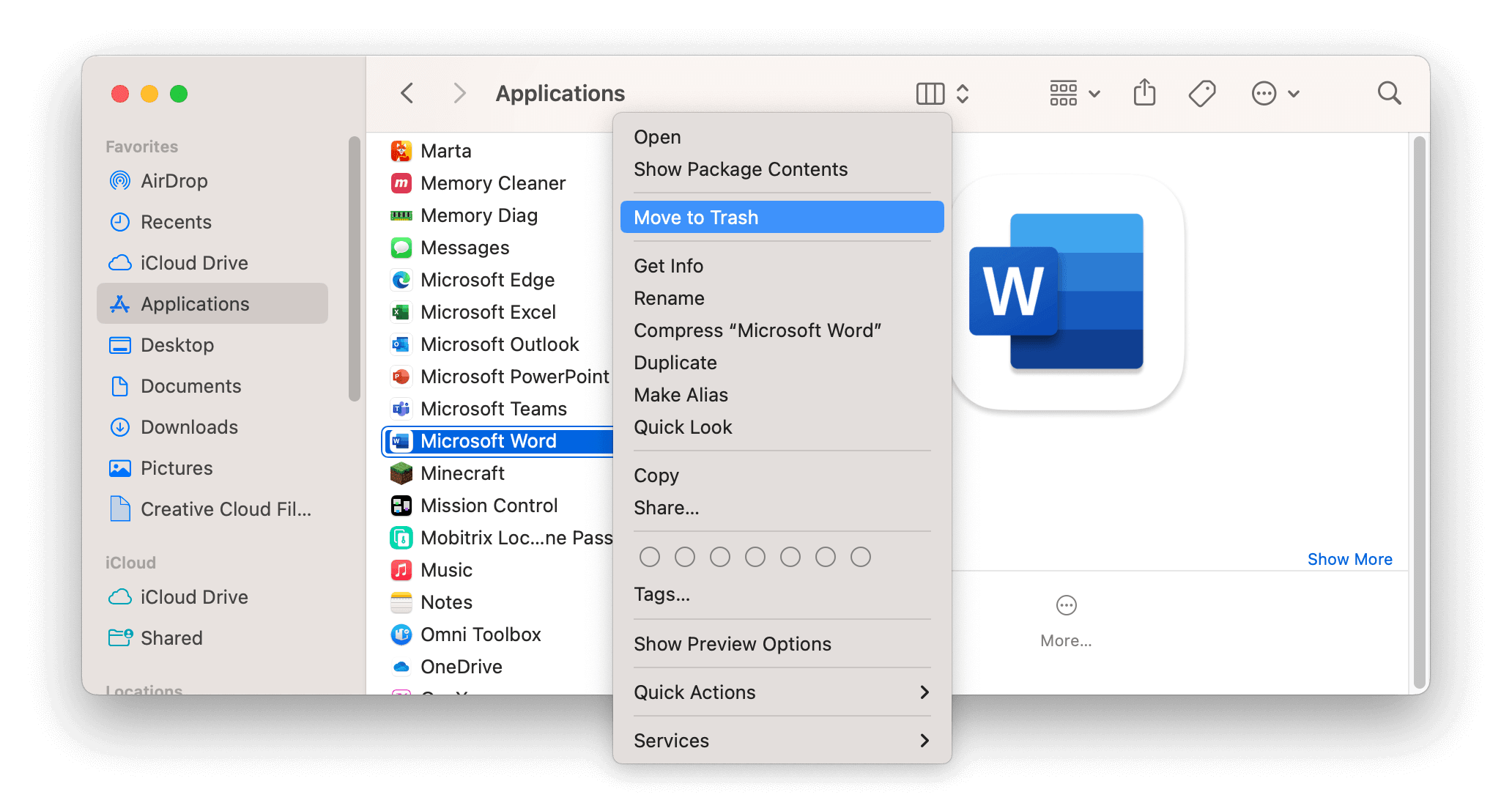
If you can't find the app in the main Applications folder, check the Applications folder inside your home folder. You can also search for the app using Spotlight.
Moving an app to the Trash may leave behind settings, caches, or other support files. For detailed instructions on reviewing these files, see how to remove app leftovers on Mac.
2. Use the App's Built-In Uninstaller
Some apps come with an uninstaller that removes the app and components it installed elsewhere on your Mac. This is especially useful for apps that use background services, extensions, or multiple programs.
- Quit the app.
- Open Finder > Applications.
- Open the app's folder, if it has one.
- Look for an app named Uninstall, Uninstaller, or something similar.
- Open the uninstaller and follow the on-screen instructions.
- Restart your Mac if prompted.


Some apps place an uninstall option in their own menu or settings rather than in a separate app. If you can't find it, check the developer's official removal instructions.
For app-specific help, see our guides to uninstalling Adobe Creative Cloud and removing Avast from Mac.
3. Uninstall Apps Using BuhoCleaner
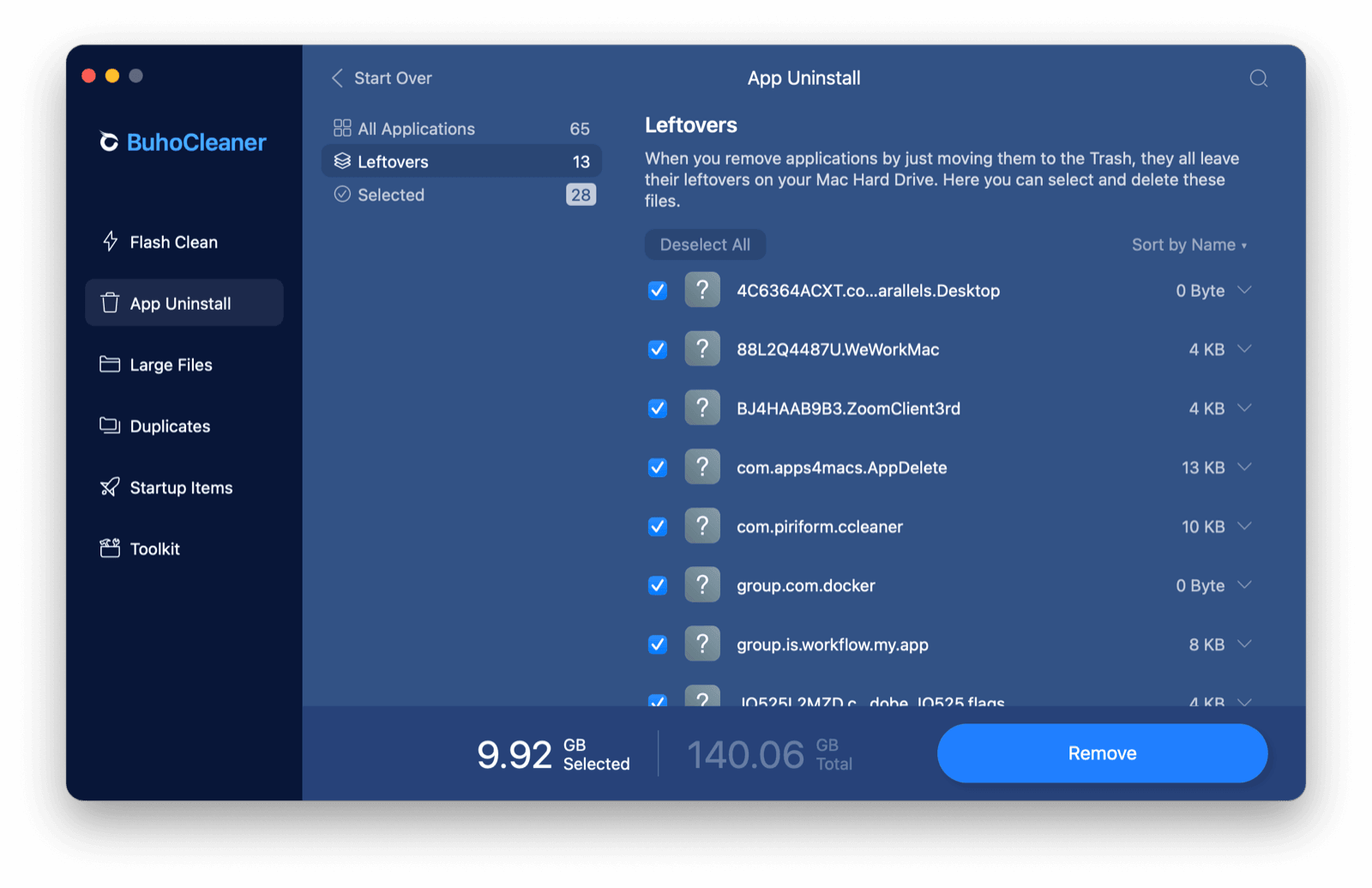
If you want to review multiple installed apps in one place, BuhoCleaner, a Mac cleaner developed by Dr.Buho Inc., includes an App Uninstall feature. It also has a Leftovers view for reviewing detected files associated with apps you've already removed.
To completely uninstall apps on your Mac with BuhoCleaner:
- Download, install, and open BuhoCleaner.
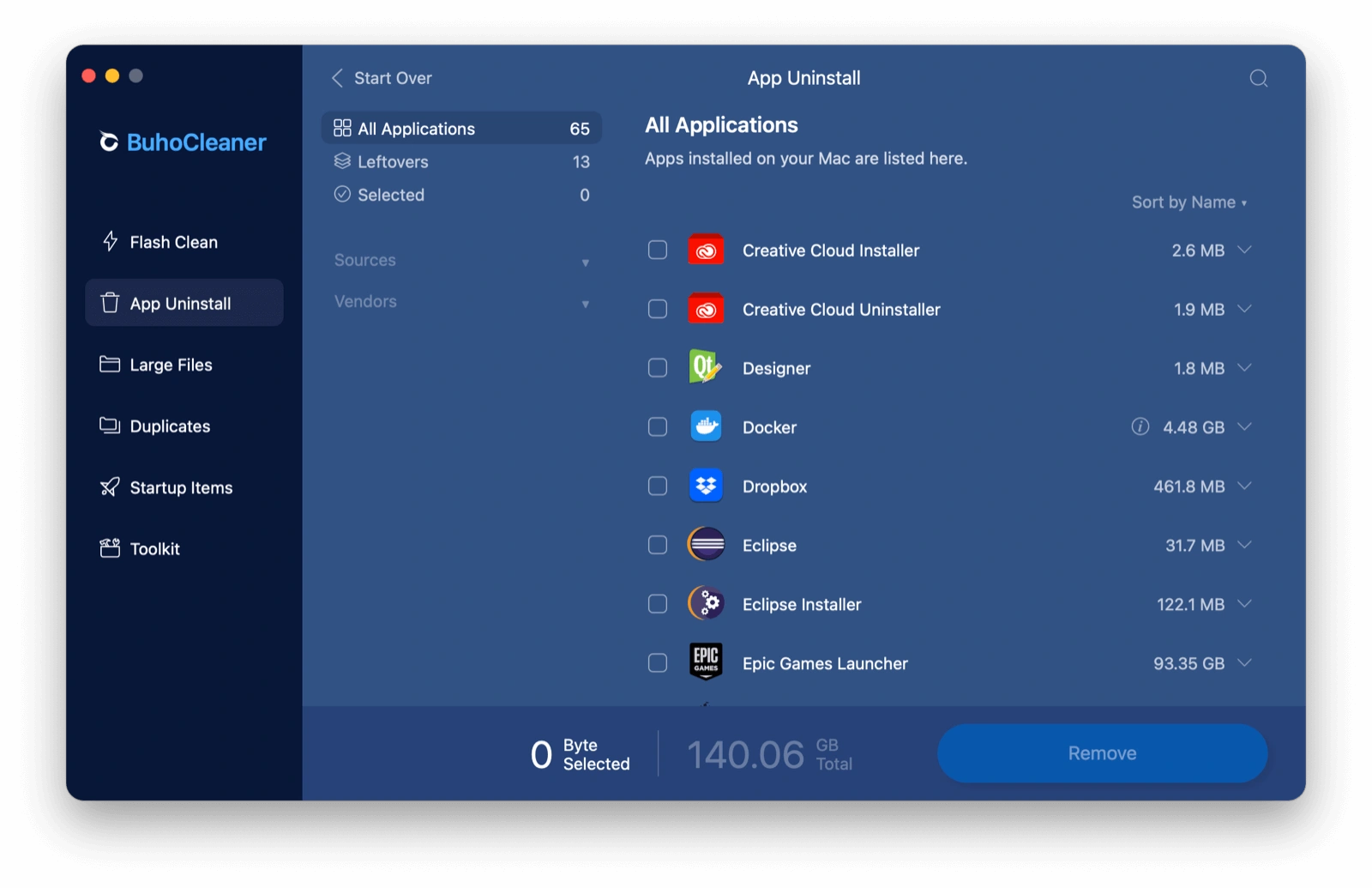
- Select App Uninstall.
- Find and select the apps you want to remove.
- Review your selection, click Remove, and follow the prompts.
- To review files associated with apps you've already removed, open Leftovers. Check the detected items before deleting them.

BuhoCleaner can help you find associated files, but no single method can guarantee that every file an app created will be found. If an app has its own uninstaller, follow the developer's instructions first.
4. Uninstall App Store Apps Using Launchpad
On macOS versions that include Launchpad, you can use it to delete eligible apps downloaded from the App Store.
- Open Launchpad from the Dock.
- Find the app you want to delete.
- Click and hold the app until its icon starts to jiggle.
- Click the X on the app icon.
- Confirm that you want to delete the app.

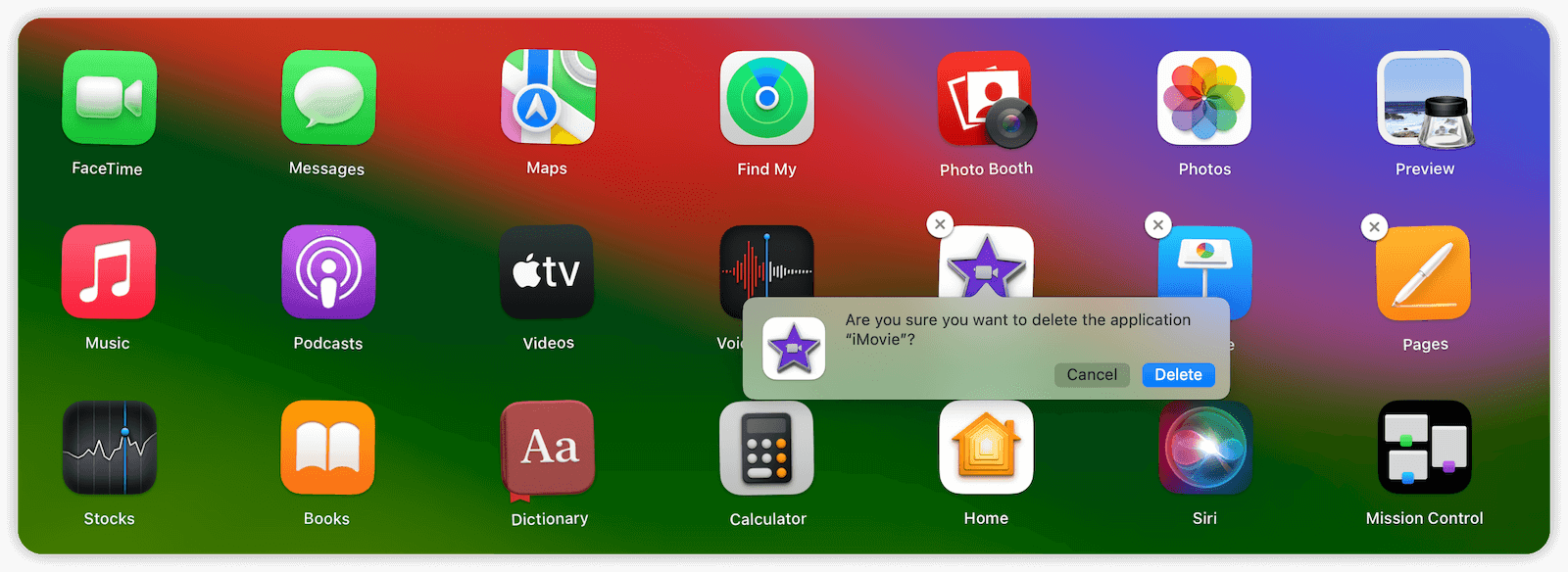
If the X doesn't appear, the app may not be eligible for removal through Launchpad. In this case, look for the app's uninstaller or use BuhoCleaner or Finder instead.
If an app icon remains in Launchpad after you uninstall the app, it may point to another copy or a shortcut still on your Mac. You can drag the icon to the Dock, then Command-click it to see whether Finder reveals its location.


For more solutions, see how to remove a deleted app icon from Launchpad.
Frequently Asked Questions
How Do I Uninstall Mac Apps Using Terminal?
Terminal is an option if you're comfortable with command-line tools. The appropriate method depends on how the app was installed, and removing the app doesn't necessarily remove its associated files.
For instructions and precautions, see how to uninstall Mac apps using Terminal.
How Do I Delete an App on Mac That Won't Delete?
First, make sure the app is closed, then try moving it to the Trash again. If that doesn't work, check whether you need administrator permission or whether the app has its own uninstaller.
If you're trying to remove a built-in app such as Chess, Safari, or Music, macOS may prevent you from deleting it through Finder.
Can I Uninstall Built-in Apps on Mac?
Some apps required by macOS can't be deleted using Finder. The available options depend on the app and your macOS version.
Learn more about uninstalling built-in apps on Mac.
Can I Uninstall Apps on Mac for Free?
Yes. Finder and an app's own uninstaller don't require a separate paid cleanup tool. You can also review common leftover locations manually, although identifying files may take more time.
Wendy is a tech enthusiast with a deep passion for all things iPhone, iPad, and Mac. Wendy is always on the lookout for Apple products and is committed to providing Apple users with some of the latest information and useful tips.