- iOS 27 Installation
- iOS 27 Problems
iOS 27 Siri Not Working? Try These Fixes

Is Siri not working after updating to iOS 27? Learn how to fix common Siri problems, check Siri AI availability, and get Siri working again on your iPhone.
Updated to iOS 27 and suddenly Siri isn't responding, won't talk back, or just doesn't work as it used to? You're not alone. And with Apple's new Siri AI in iOS 27, there are now a few more things worth checking.
Before assuming that Siri is broken, make sure your iPhone actually supports the new Siri AI and that it's available in your region and language. Below, we'll go through the most common Siri problems on iOS 27 and the fixes that are worth trying first.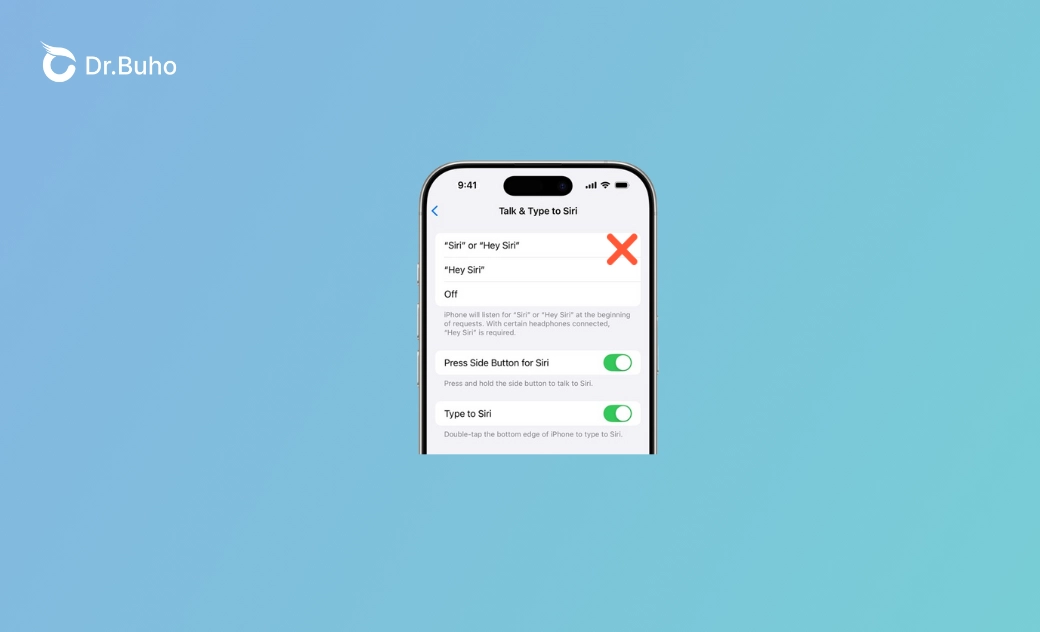
Why Is Siri Not Working After Updating to iOS 27?
There isn't one single reason why Siri may stop working after an iOS update. In many cases, the problem is related to Siri settings, voice recognition, audio output, network connectivity, or a temporary system problem.
There is also another possibility with iOS 27: you may be expecting Siri AI, but your iPhone, language, or region may not support it yet.
Here are the most common situations to check:
- Siri or "Hey Siri" is turned off or needs to be set up again after the update.
- Your iPhone isn't recognizing your voice correctly because of microphone problems or an incomplete Siri voice setup.
- Siri responds, but you cannot hear the spoken response because of Siri's response settings, volume, Silent mode, or an audio device.
- A Bluetooth headset, AirPods, or another connected audio device is being used for Siri's audio input or output.
- Your network connection is unstable, which can affect Siri requests that require Apple's services.
- A temporary iOS system problem is preventing Siri from responding normally.
- Siri AI is unavailable because your iPhone does not support Apple Intelligence, or because your current language or region is not supported.
iOS 27 Siri Not Working? Try These Fixes
Before trying more complicated solutions, start with the basic checks below. In many cases, you can get Siri working again without resetting your iPhone.
1. Check Siri Settings
After a major iOS update, it's worth checking Siri's settings first.
OpenSettings > Apple Intelligence & Siri > Talk & Type to Siri.
Depending on your iPhone and language settings, you may see options such as "Siri" or "Hey Siri".
Make sure Siri is enabled. If it is already enabled but doesn't respond, turn the option off, turn it back on, and complete the voice setup again.


You can also check:Settings > Apple Intelligence & Siri > Siri Responses.
If Siri responds but doesn't speak, make sure the response settings are configured to provide spoken responses.
Apple also recommends restarting the iPhone if Siri settings don't appear correctly after an update.
2. Set Up "Siri" or "Hey Siri" Again
If Siri doesn't recognize your voice after updating to iOS 27, try setting up voice recognition again.
Go toSettings > Apple Intelligence & Siri > Talk & Type to Siri.
Turn off "Siri" or "Hey Siri", then turn it back on.
Follow the on-screen instructions and repeat the voice training process.
This is particularly useful if Siri stopped responding to the wake phrase after the iOS update.


3. Check If Siri Can Hear You
If Siri doesn't react when you say "Siri" or "Hey Siri", don't immediately assume that iOS 27 is broken.
The microphone may be blocked by dust, a case, or another physical obstruction.
Try removing the case temporarily and check the microphone openings. You can gently clean them with a soft, dry brush.
It's also worth testing the microphone in another app. For example, open Voice Memos and make a short recording.
If the recording also sounds abnormal, the problem may be related to the iPhone's microphone rather than Siri itself. In that situation, Apple Support or an Apple Store is the better next step.
4. If Siri Responds but Doesn't Talk, Check Siri Responses
Not every Siri problem is a voice-recognition problem.
If you can activate Siri but don't hear an answer, check the response settings.
Go to Settings > Apple Intelligence & Siri > Siri Responses.
Look for the option that controls spoken responses and select Prefer Spoken Responses if you want Siri to speak its answers.
Also check the iPhone's volume and make sure audio isn't being routed to another device.
Apple specifically recommends checking Siri Responses when Siri isn't speaking.
5. Disconnect Bluetooth Devices
AirPods, headphones, car audio systems, and other Bluetooth devices can change where Siri's audio is coming from or where its response is played.
If Siri suddenly behaves differently after connecting a Bluetooth device, temporarily disconnect it and try Siri again.
Go to Settings > Bluetooth.
Then disconnect the connected headphones or other audio device and test Siri using the iPhone's built-in microphone and speaker.
You don't necessarily need to forget the device permanently. Disconnecting it is enough for this troubleshooting step.
6. Check Your Internet Connection
A stable internet connection is important for many Siri requests.
If Siri takes a long time to respond, repeatedly says that something went wrong, or fails to complete certain requests, try switching between Wi-Fi and cellular data.
You can also temporarily turn Wi-Fi off and test Siri using mobile data.
If Siri starts working normally after changing networks, the problem may be related to your current network rather than the iOS 27 installation itself.
If you use a VPN, it's also worth temporarily disabling it. Apple notes that some VPN configurations can prevent Siri-related settings or services from working correctly.
7. Restart Your iPhone
If Siri was working normally before the iOS 27 update but suddenly stopped responding, a temporary system problem is also possible.
Start with a normal restart.
After restarting, checkSettings > General > Software Update.
If Apple has released a newer iOS 27 update, installing it may resolve bugs found in the initial release.
This is usually worth trying before performing a system repair or resetting the device.
Still Can't Use Siri? Repair iOS System Problems
If you've checked Siri settings, microphone access, audio output, network connectivity, and compatibility, but Siri still doesn't work, the problem may be related to the iOS system itself.
In this situation, you can try BuhoRepair, an iOS system repair tool that provides Standard Repair and Advanced Repair modes.
For a typical system problem, Standard Repair is the better place to start. It is designed to repair iOS system issues without erasing the device's data.
- Download BuhoRepair and connect your iPhone to your computer.
- Open BuhoRepair and choose System Repair.
- Select Standard Repair and follow the on-screen instructions.


If the problem appeared immediately after upgrading to iOS 27 and normal troubleshooting doesn't help, repairing the iOS system can be worth trying before considering a full reset.
Siri AI Is Not Showing Up on iOS 27? Check This First
Apple Intelligence and Siri AI require compatible hardware. Apple currently lists the following iPhones for Apple Intelligence and Siri AI:
- iPhone 16 models and later
- iPhone 15 Pro
- iPhone 15 Pro Max
Older iPhone models can still use the regular Siri where supported, but they don't get the new Siri AI features.
Your Language and Region Also Matter
Even if your iPhone is compatible, Siri AI availability also depends on language and region.
Apple says Siri AI is initially rolling out in English. More importantly, Siri AI is not initially available on iPhone and iPad in the European Union, and Apple's current information also says Siri AI and other new Apple Intelligence features are not available in China while Apple works through regulatory requirements.
That means an iPhone in the EU or China can be running the latest iOS 27 and still not show the new Siri AI features.
So if your regular Siri works but you can't find the new Siri AI experience, that doesn't necessarily mean Siri is broken.
It may simply be a compatibility, language, or regional availability issue.
Conclusion
Siri not working properly after upgrading to iOS 27 doesn't necessarily mean that Siri itself is broken. In many cases, the issue can be resolved by trying the troubleshooting methods above.
Keep in mind that Siri AI is different from the standard Siri experience. Its availability depends on compatible hardware, supported languages, and regional availability, so some users may not have access to all Siri AI features immediately after updating to iOS 27.
Robert is a tech-savvy fan who loves all things Apple. As a hobbyist of gardening and meditation, he is also a seasoned writer covering a wide array of Apple products, like iPhone, iPad, iOS, and more.